Solving the Marine Composite Crisis: Upcycling Retired Racing Yachts
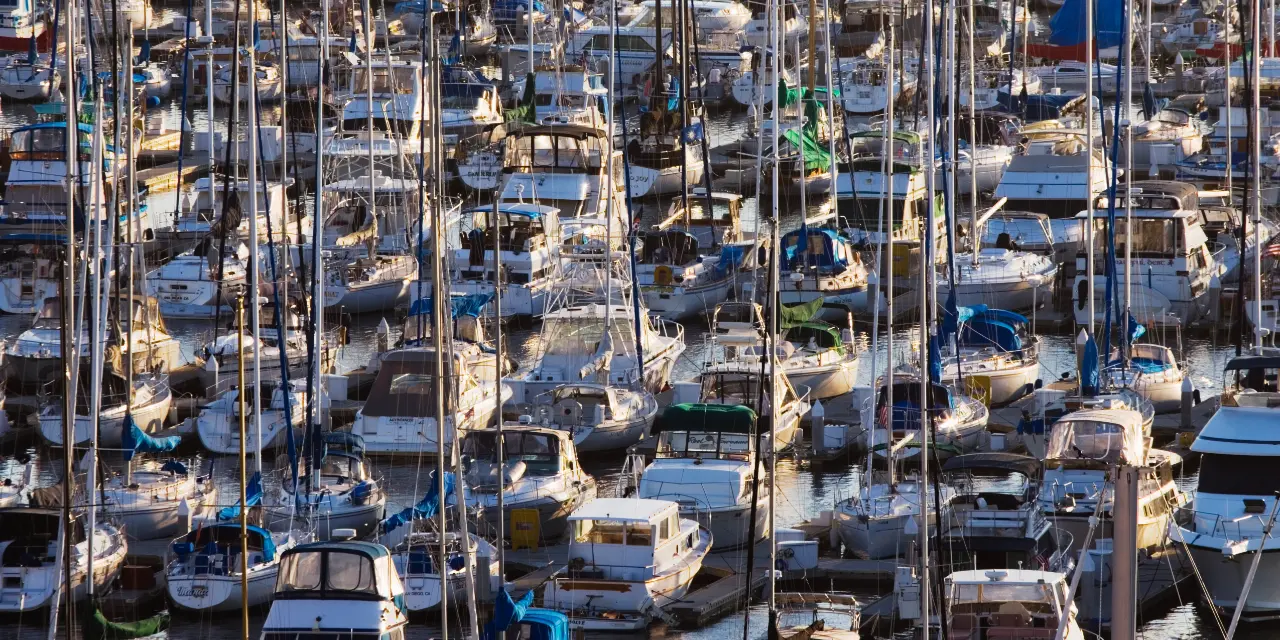
Every year, the maritime sector quietly buries one of the world's most durable engineered materials — and calls it disposal.
Fiberglass does not decay. A hull set into a landfill in 1985 is structurally intact beneath the surface today, leaching resin compounds into groundwater while the glass filaments it contains remain essentially unchanged. Yet this is precisely what happens to the vast majority of the world's end-of-life recreational andracing vessels.
The marine industry built its modern era on glass-reinforced polymer (GRP)composites. Beginning in the late 1950s, fiberglass displaced wood as the dominant hull material precisely because of its longevity, resistance to rot,and low maintenance requirements. A well-maintained hull can last fifty years or more. It was an engineering triumph. It is now an environmental liability without a plan.
This article examines the structural dimensions of that liability, explains why existing recycling approaches have consistently failed to produce a closed-loopsolution, and presents a case study in what a credible path forward actually looks like — drawn from one of the most symbolically loaded vessels in modern sailing.
The Scale of the Problem: What the Industry Doesn't Talk About
A Fleet That Was Never Designed to Die
The recreational boating boom of the 1960s and 1970s produced tens of millions off iberglass hulls worldwide. There are an estimated 12 million registered boatsin the United States and 6 million in Europe, the overwhelming majority constructed from glass-reinforced composites. Trade Only Today
Globally,it is estimated that 35 to 40 million boats are nearing their end of life. Earth911
The seboats age out at a rate the industry has consistently underestimated. Currentdata suggests that 2 to 3 percent of all recreational boats in the UnitedStates reach end-of-life each year — approximately 200,000 vessels annually. RIMTA
The scale of what's accumulating is significant: between 2003 and 2012, an estimated 1.5 million recreational craft were retired in the US alone, with that rate not expected to slow as many first-generation fiberglass boats launched in the 1970s through 1990s reach their end-of-life status. Professional BoatBuilder
On the European side, the data is equally sobering. The European CompositesIndustry Association (EuCIA) estimates the total volume of thermoset composites waste in Europe at around 400 kilotons per year, and estimates that 40 to 70percent of this waste is currently landfilled or incinerated without energy recovery. EuCIA
~200,000 recreational vessels reach end-of-life annually in the US alone 35–40M boats globally approaching or past end-of-life 40–70% of European thermoset composite waste goes to landfill or incineration
The Economics of Abandonment
The disposal economics are brutally simple, and they explain why derelict vessel populations continue to grow despite mounting regulatory pressure. Legal disposal averages roughly $14,000 per vessel — in some coastal markets,landfill fees run to $150 per linear foot.
Fora 40-foot cruising boat, that's $6,000 in tipping fees before removal,transport, and hazardous materials handling.
The result is predictable: in Florida alone there are an estimated 1,500 abandoned or derelict boats, and the 275 in the state's active case file will probably cost $3.5 million to clean up. Trade Only Today
Marinas across the US and Europe hold boats whose owners stopped paying storage fees years ago, unable — or unwilling — to absorb disposal costs. Some boat owners have begun advertising vessels for sale at $1 simply to transfer legal title and the associated liability.
This is not a fringe phenomenon. It is a structural market failure, and it is accelerating as the 1970s-era fleet reaches the end of its serviceable life.
"The problem is not going away. We've got to find a way to take these end-of-life hulls out of the stream of commerce and get them back into the stream of commerce." — Christopher Sponberg, naval architect
Why Conventional Recycling Has Failed
The Chemistry of Thermoset Composites
To understand why fiberglass recycling has proven so intractable, it helps to understand the underlying material science. A fiberglass hull is not simply glass encased in plastic. It is a thermoset composite — a matrix of glass filaments permanently bonded with cured polyester or epoxy resin. Unlike thermoplastic matrices, thermoset resins form irreversible cross-linked polymer networks during curing that cannot be re-melted by means of heat or solvent, sorecycling is often an expensive and low-rate process.
This chemistry creates the central problem: you cannot simply melt a boat hull and pour it into something new. Any recycling process must either accept significant fiber degradation, or develop methods sophisticated enough to separate the phases without destroying what you're trying to recover.
The Three Approaches — and Their Limits
The industry has explored three broad recycling pathways, each with documented limitations:
Mechanical shredding is the dominant current approach: hulls are shredded into powder or coarse aggregate for use as filler in low-grade composites, cement, or road base. It is simple and handles 100 percent of the material volume. The critical limitation: the glass fibers are reduced to fragments too short for structural applications, eliminating the material's primary value. Shredding produces filler, not fiber.
Cement co-processing has been demonstrated at meaningful scale. A large cement plant in Germany uses 15,000 tons of composite waste annually, mostly from turbine blades Tencom
— a step forward from landfill, but one that destroys the fiber entirely. Total material downcycling, not recovery.
Pyrolysis — heating the composite to temperatures between 450°C and 800°C in a low-oxygen environment — burns away the resin matrix and recovers the glass fibers intact, along with oil and syngas as useful byproducts. The problem is that long processing times at elevated temperature lead to aggravation of surface flaws along with structural changes, resulting in severe deterioration of the strength of recovered fibers and limiting their use to lower-grade products. Wiley Online Library
The shared limitation across all three approaches is the same: none recovers glass fiber at a quality level sufficient for structural or precision applications. The valuable material — high-quality glass fiber — is consistently downgraded or destroyed.
The central unsolved problem of fiberglass recycling is not collection, or scale, or economics — it is chemistry. Recovering the fiber without degrading it has, until recently, been the missing piece.
A Different Approach: Regeneration, Not Downcycling
The Material Science of Virgin-Quality Recovery
What separates regenerative fiber recovery from conventional recycling is the treatment of the glass fiber surface — specifically, its sizing chemistry.
Glass fibers are manufactured with a chemical coating called sizing: a proprietary blend of coupling agents, film formers, and lubricants that bonds the glass surface to the resin matrix and governs how the fiber performs under mechanical load. This sizing is what makes a glass fiber composite structural rather than decorative. When sizing is damaged — through heat, chemical attack, or mechanical abrasion — the resulting fiber is weaker, less consistent, and poorly bonded to new matrix systems.
Conventional recycling processes strip, degrade, or destroy the sizing in the process of separating fiber from matrix. The fiber that emerges is technically glass, but it behaves like an inferior material because the interfacial chemistry has been compromised.
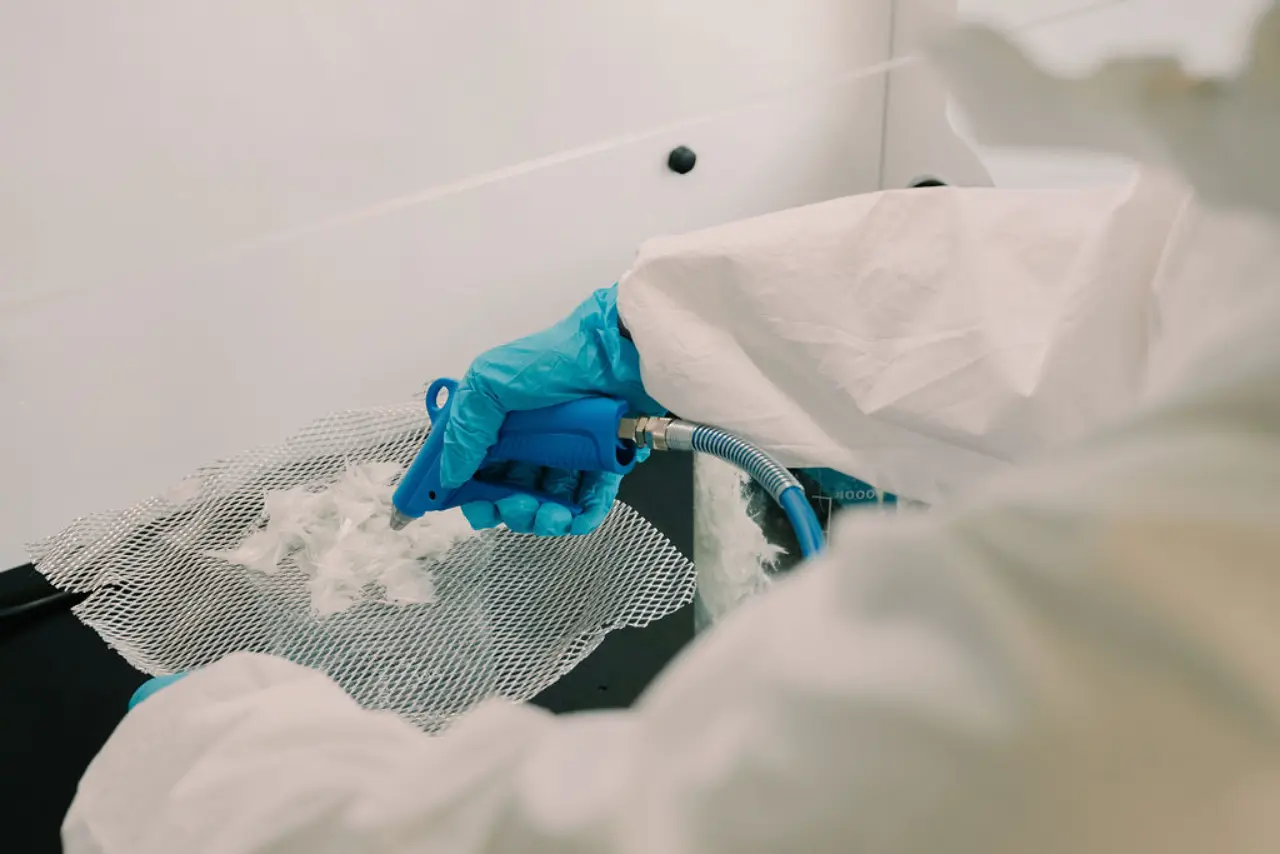
Verretex, an EPFL spin-off founded in Lausanne in January 2025 by Dr. Mitchell Anderson, has developed a proprietary process that approaches this problem differently. Rather than accepting fiber degradation as an inevitable consequence of separation, the company's technology is specifically designed to preserve and restore the interfacial chemistry of recovered glass fibers — regenerating them to virgin-like performance specifications. After extensive testing and qualification trials, Verretex has confirmed that fiber recovered through its process is among the highest-grade recycled glass fiber currently available. CompositesWorld
This distinction — regeneration versus recycling — is not semantic. It determines whether recovered marine fiber can enter the supply chain of precision manufacturers, or whether it is fated to become filler.
Why Marine Fiber Is a Particularly Rich Source
End-of-life racing and offshore cruising yachts represent a compelling feedstock for regenerative recovery. High-performance marine composites are typically manufactured to exacting specifications using high-quality E-glass or S-glass fiber systems, often with aerospace-grade resin systems. The fiber quality embedded in a racing hull is substantially higher than what you find in a mass-produced consumer product or a construction panel.
Marine composites also tend to be manufactured with relatively consistent layup specifications, which simplifies process control during recovery — a more predictable feedstock than, for instance, a wind turbine blade containing multiple hybrid fiber architectures. The challenge is that marine composites almost universally use thermoset resins — epoxy, polyester, or vinyl ester — and are therefore not amenable to conventional thermoplastic recycling approaches. This is where processes capable of working with thermoset feedstocks without destroying the fiber become decisive.
Case Study: Use It Again! and the ID Genève Partnership
The Vessel
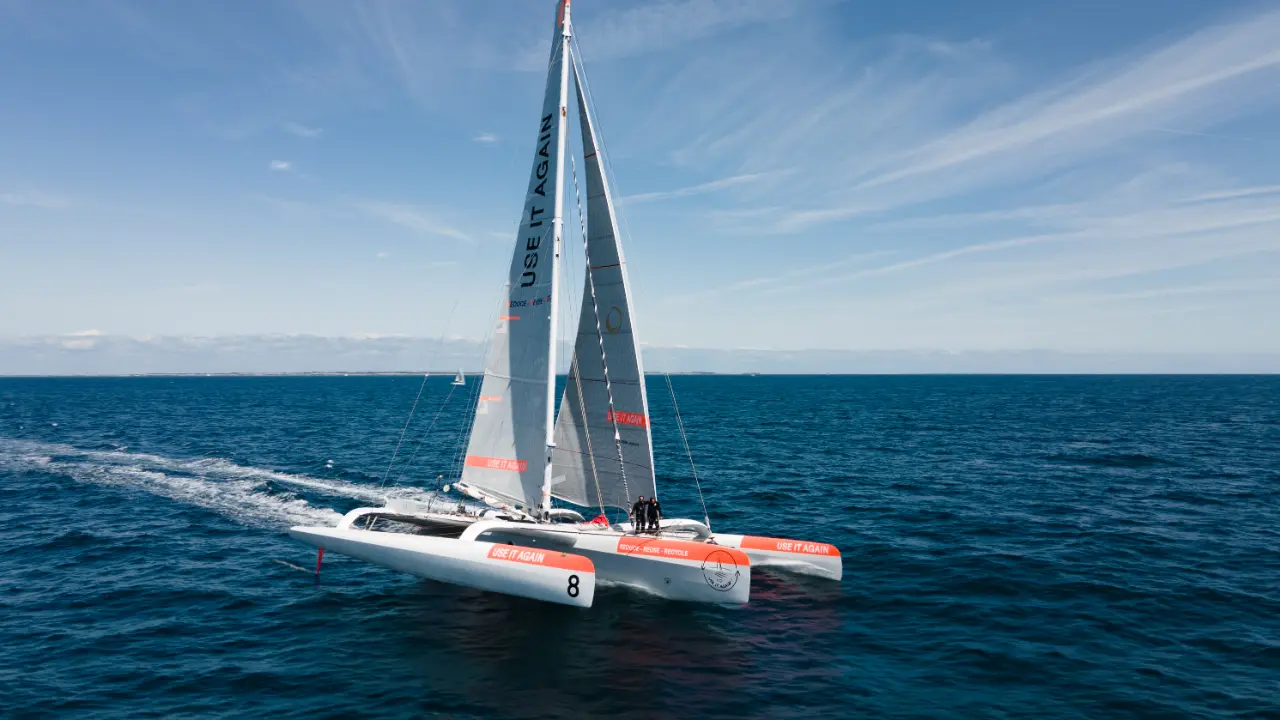
In February 2005, Dame Ellen MacArthur sailed a custom 75-foot trimaran around the world in 71 days, 14 hours, and 18 minutes — breaking the solo circumnavigation record. The boat, originally named B&Q/Castorama and designed by Nigel Irens, was built in Australia over 30,000 man-hours. After the record attempt, it was laid up in the port of Brest.
In 2016, French ocean advocate and professional sailor Romain Pilliard acquired the vessel with the intention of rebuilding it according to circular economy principles — sourcing reconditioned sails from other vessels, retaining the original hull, mast, and boom, and demonstrating that performance and environmental responsibility are not mutually exclusive. Boatnews
Renamed Use It Again!, the trimaran completed a westbound circumnavigation and has since partnered with the University of Paris-Sorbonne on underwater sound mapping of whale and dolphin communications.
The Material Partnership
During routine renovation of Use It Again!, roughly one kilogram of glass fiber composite was removed from the still-operational vessel. That material is being processed by Verretex, and the output will go to ID Genève, the B Corp-certified Geneva watchmaker, for use in limited-edition watch faces. The timepiece is due to be unveiled at Climate Week New York in September 2026, with Pilliard planning to wear one when he races in the Route du Rhum on 1 November.
"My trimaran Use It Again shows another route is possible for the circular economy. Having composite pieces of my boat upcycled into a luxury watch is very special, and it makes for an exciting project built all together with Verretex and ID Genève watches." — Romain Pilliard
Why This Is Strategically Important
The Verretex team is explicit that one kilogram is a demonstration quantity, not a production run. The strategic purpose is different: it is proof-of-performance at the precision end of the market.
Swiss luxury watchmaking operates to tolerances measured in microns. Components must meet dimensional stability, finish, and consistency requirements that are categorically different from construction or wind energy applications. If recovered composites can meet the tolerances required for precision watch components, the case for using recovered marine fiber in industrial applications becomes substantially stronger — forcing the industry to rethink its waste streams. Resource Media
This is the logic of the partnership: use the most demanding possible application as the performance benchmark, and let the results speak to the full range of use cases below it.
The Use It Again!/ID Genève partnership validates recovered marine fiber at the most demanding tier — providing proof-of-performance that applies across sectors below it.
The Regulatory Tailwind
The marine composite crisis is not only a materials science problem — it is increasingly a regulatory one. The EU has moved to restrict thermoset composite landfilling, pushing member states toward alternative end-of-life management. France has established the APER program — Association pour la Plaisance Eco-Responsable — which levies a fee on new boat sales to fund end-of-life vessel collection and processing. It is one of the few functioning boat recycling systems in the world, though its preferred solution remains cement co-processing rather than fiber recovery.
In the United States, federal and state programs have begun addressing the abandoned and derelict vessel crisis through remediation funding. Virginia committed $3 million to a grant program helping localities remove abandoned and derelict vessels.
NOAA's Marine Debris Program has funded pilot projects across multiple states.
The regulatory direction is clear: landfilling fiberglass is becoming legally and reputationally untenable. What is not yet clear, in most markets, is what alternative the industry will organize around. Technologies capable of recovering fiber at virgin quality levels are positioned to fill that gap as regulatory pressure mounts.
What This Means for the Maritime Industry
For Boatbuilders and Naval Architects
The marine composite crisis is a design problem as much as it is a disposal problem. Hulls built without any consideration for end-of-life fiber recovery will continue to produce problematic feedstocks — mixed fiber systems, inaccessible laminates, and complex hybrid structures that complicate separation. Boatbuilders who begin specifying materials with regenerative recovery in mind — consistent fiber systems, documented layup schedules, accessible structural sections — will be better positioned as material provenance becomes a commercial and regulatory requirement.
For Fleet Operators and Racing Organizations
The professional racing circuit operates on a cycle that produces significant quantities of end-of-life composite material. High-performance hulls have finite competitive lifespans — typically far shorter than their structural life. The composites embedded in retired offshore racing yachts represent high-quality glass fiber that currently has no established recovery pathway. Organizations and syndicates that partner with regenerative processing companies can convert that liability into documented circular economy credentials — increasingly relevant in sponsor relations and ESG reporting.
For ESG Investors
The convergence of regulatory pressure, material scarcity, and circular economy policy creates a compelling investment thesis for technologies that can close the fiberglass loop. Glass fiber production carries a documented carbon intensity problem: a TECH-FAB Europe life-cycle assessment conducted via PwC found that glass fiber production accounts for 89 percent of a fabric's carbon footprint. Recovering and regenerating those fibers — rather than manufacturing virgin replacements — represents substantial embodied carbon avoidance, measurable against established LCA frameworks.
Verretex has raised CHF 1.66 million to date and was ranked among Switzerland's Top 100 Startups in its first year of operation. It has been selected by the Solar Impulse Foundation and recognized by Project Switzerland. Its strategic partnership with Fiberloop AB connects it to an ecosystem that includes Beneteau, Owens Corning, Veolia, and Chomarat — among the most relevant supply chain names in composites recycling. A pilot study conducted with wind turbine manufacturer Ryse Energy confirmed that Verretex's recycled textile meets rigorous blade strength and durability standards, with no modifications to production equipment or schedules required. GGBa
The Boat Has Come Full Circle
There is a neat circularity to the trimaran's story that goes beyond the material itself. MacArthur sailed it around the world, then spent the next fifteen years building the intellectual case for keeping materials in use. Pilliard acquired the vessel, rebuilt it from reconditioned parts, and is now handing its waste composites to a company trying to prove that glass fiber need not be a single-use material. Resource Media
That proof requires more than a kilogram of watch faces. It requires demonstrating, at commercial scale, that recovered marine fiber can meet the quality requirements of demanding downstream manufacturers. It requires logistics infrastructure capable of collecting end-of-life hulls, processing them economically, and delivering consistent feedstock to industrial customers. It requires regulatory frameworks that make recovery commercially viable compared to landfill. And it requires the maritime industry to treat its materials as assets with residual value rather than liabilities to be minimized.
None of these requirements are insurmountable. The material science is being solved. The regulatory pressure is building. The market for high-quality recycled fiber is real and growing — driven by carbon accounting requirements, sustainable procurement policies, and the increasing cost of virgin glass fiber production.
The marine composite crisis is real. So is the beginning of its resolution.
The question for maritime industry leaders is no longer whether the fiberglass disposal problem needs solving. It is whether their organizations will be part of the solution — or will continue to bury the answer in the ground.
About Verretex
Verretex is an EPFL spin-off based in Saint-Sulpice (Lausanne), Switzerland. Founded in January 2025 by Dr. Mitchell Anderson alongside Dr. Lidia Rocoffort de Vinnière, and Dr. Nour Halawani, the company has developed a proprietary process for regenerating end-of-life fiberglass into virgin-quality textile materials. Verretex serves the wind energy, automotive, aerospace, marine, and sporting goods sectors. The company has raised CHF 1.66M to date and was ranked #80 in Switzerland's Top 100 Startups 2025 in its first year of incorporation.
More news