Designing for Circularity: How Regenerated Fiberglass Composites Fit Into Your Existing Workflow – Today

The sustainable materials transition has a reputation problem.
For most manufacturers, "going green" has been code for something expensive, slow, and disruptive — a capital project dressed up in ESG language. New machinery. New supplier qualification cycles. New process parameters to validate. New training for line operators who've spent years mastering the incumbent material.
That reputation didn't come from nowhere. It came from real experiences.
Which is why the most important thing to understand about Verretex's regenerated glass fiber textiles isn't that they're sustainable. It's that they work exactly like what you're already using — and they slot directly into your current production without any of the above.
No retooling. No retraining. No capital outlay. Just a lower-carbon material that performs.
The Problem With Composite Waste — and With Composite Recycling
Glass fiber reinforced polymers are engineered to last. That's precisely what makes them one of the most difficult materials to deal with at end of life.
Wind turbine blades. Boat hulls. Automotive body panels. Construction cladding. Aerospace components. All of them rely on GFRP for the same reasons: high tensile strength, low weight, corrosion resistance, and long service life. And all of them, once decommissioned, face the same bleak outcome: landfill or incineration.
The global volume of composite waste is growing. Europe alone faces tens of thousands of tonnes of decommissioned wind turbine blades annually, with no established recycling pathway. The situation in North America, marine sectors, and automotive is comparable.
Traditional recycling methods make this worse, not better. Pyrolysis — the most commonly deployed approach — applies heat to burn off the resin, leaving behind glass fibers that are brittle, contaminated, and structurally degraded. The output is unsuitable for structural applications. It gets downcycled into low-value filler or, more often, discarded anyway.
The result is a significant market failure: composite manufacturers want to source recycled material, but no viable high-performance supply exists. Recyclers want a viable business model, but there's no stable end market for recovered fibers. The circle never closes.
Why 89% of the Carbon Is in the Glass
A Life Cycle Assessment of glass fiber fabrics conducted by TECH-FAB Europe (via PwC) found something striking: the production of the glass fiber itself accounts for 89% of the carbon footprint of the final fabric, from raw material extraction to factory gate.
That's not the resin. Not the weaving. Not logistics. The fiber production — specifically the high-temperature remelting of silica sand into new glass — is where almost the entire carbon burden lives.
This finding has a profound commercial implication: any process that avoids remelting and regenerates fibers at their existing state delivers massive embodied carbon savings — with no penalty to the downstream manufacturer.
That is exactly what Verretex does.
The Verretex Process: Regeneration, Not Remelting
Verretex, an EPFL spin-off based at the EPFL Innovation Park in Lausanne, has developed a proprietary upcycling process that cleans and restores recycled glass fibers at the microscopic level — rebuilding their surface properties and mechanical performance to virgin-like quality standards — without ever remelting them.
The process begins with reclaimed fibers sourced from a network of established recycling partners across Europe and internationally — end-of-life composites, production scrap, and decommissioned structures from sectors including wind energy, marine, and construction. These fibers are collected, packaged, and transported in Verretex's proprietary high-density system, which minimizes degradation before processing. They are then put through the regeneration process, which removes contamination, restores surface chemistry, and rebuilds the fiber-matrix bonding characteristics that determine performance in composite applications.
The output is a 100% post-consumer recycled glass fiber nonwoven textile — mechanically consistent, structurally sound, and processable with standard lamination techniques.
What Verretex does not do: remelt, re-extrude, or chemically dissolve the fiber. The carbon-intensive step is skipped entirely. The 89% of the carbon footprint that lives in glass production is avoided.

Drop-In Performance: What the Data Shows
Claims about sustainable material performance are easy to make. Industrial validation is harder. Verretex has it.
The Ryse Energy Wind Turbine Pilot
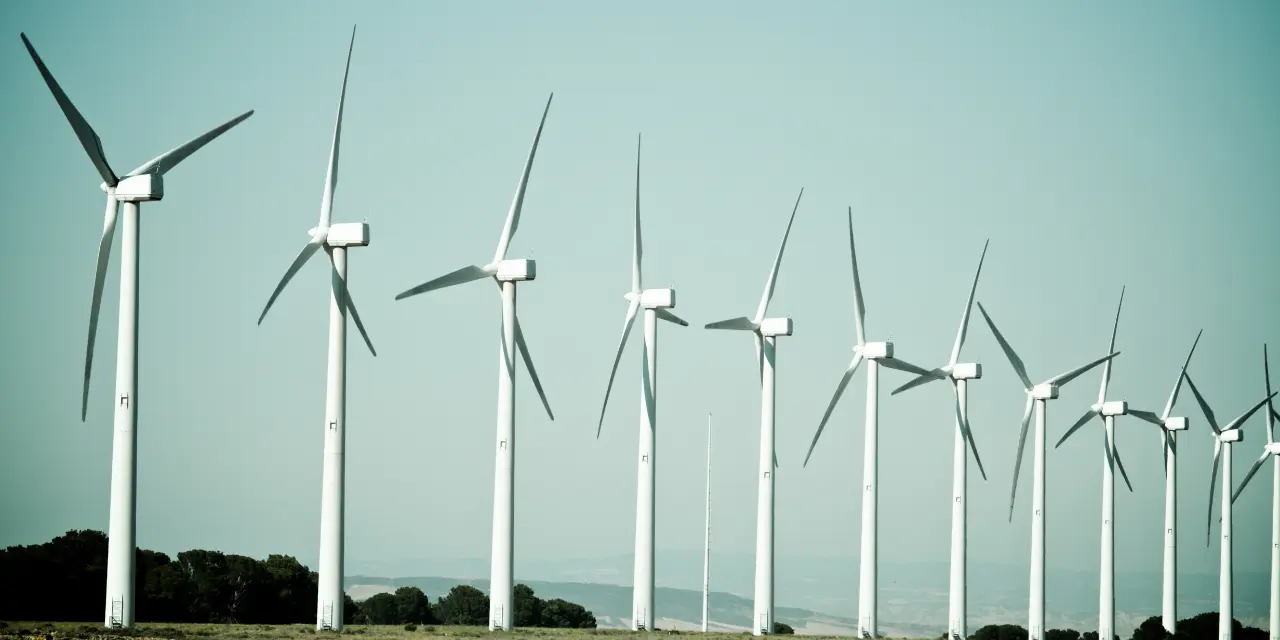
In September 2025, Verretex and Ryse Energy announced the successful completion of a pilot study in which Verretex's recycled glass fiber textile was tested as a direct replacement for virgin glass fiber in small wind turbine blade production.
The pilot was led by Neil Baxter, Technical Composite Specialist at Ryse Energy — a global manufacturer of small wind turbines and hybrid off-grid systems operating production sites in Spain, Europe, and the United States.
Key findings:
- Verretex's textile was processed using Ryse's existing blade lay-up and curing methods with no tooling modifications
- No cycle time changes were required
- The resulting test blades met all strength and durability requirements essential for wind turbine performance, in compliance with IEC 61400-2 (the international standard for small wind turbine safety and durability)
- Following the pilot, Ryse Energy confirmed plans to integrate Verretex materials across its global manufacturing footprint
"Our team was able to integrate Verretex's recycled textile seamlessly, and the resulting test blades met the strength and durability requirements essential for wind turbine performance." — Neil Baxter, Ryse Energy
This is not a lab demonstration. It is a validated, real-world manufacturing trial on production equipment, by an OEM with international standards compliance requirements and global operations. The conclusion: Verretex's regenerated fiberglass textile is a true drop-in solution for composite blade manufacturers.
What "Drop-In" Means for Your Operations
The phrase "drop-in" gets used loosely in the sustainable materials space. Here is what it means operationally for a manufacturing or procurement team evaluating Verretex:
1. No capital expenditure. Your existing autoclave, infusion equipment, layup tooling, and curing systems are compatible. No new machinery is required, and no facility modifications are needed.
2. No process re-engineering. Verretex's nonwovens match the handling characteristics of virgin glass fiber textiles. Your technicians work with a familiar material. Your process parameters stay stable. Your qualification process for the material change is the most significant step — and Verretex's technical team actively supports it.
3. No supply chain disruption. Verretex has built a stable feedstock supply through an established network of composite recycling partnerships across Europe and internationally, with active relationships spanning multiple sectors and geographies. This is not a startup offering samples; it is an industrial-scale supplier with a secured upstream and a growing downstream.
4. Consistent mechanical properties. The regeneration process produces a standardized output — not a variable, batch-dependent product. Fiber consistency is a prerequisite for any structural application, and it is a core design requirement of the Verretex process.
5. Measurable carbon reduction. Because 89% of conventional glass fiber's carbon footprint is embedded in the remelting step that Verretex eliminates, switching to regenerated fibers delivers a significant, documentable reduction in embodied carbon — directly supporting Scope 3 reporting and ESG commitments without any process change.
A Closed-Loop Supply Chain: Built, Not Promised
A material is only as sustainable as its supply chain. Verretex has built its feedstock network deliberately, with long-term commercial agreements with recyclers and decommissioning operators working across wind energy, marine, automotive, and construction sectors.
For manufacturers and procurement teams, this means geographic supply diversity rather than single-source dependency. Verretex offers long-term offtake contracts and can demonstrate a traceable, multi-source supply chain — an increasingly important requirement as downstream customers and regulators push for greater transparency in material provenance.
The feedstock relationships that underpin Verretex's supply are active, commercial, and growing — not pilot agreements or letters of intent. For any manufacturer qualifying a recycled fiber textile, supply continuity and consistency are as important as material performance. Verretex addresses both.
Industries and Applications
Verretex's regenerated nonwoven textiles are commercially active or in active qualification across:
Wind Energy — Blade skins, reinforcement layers, and core materials. The Ryse Energy pilot provides direct precedent. Blade manufacturers evaluating a low-carbon alternative to virgin glass fiber have a validated pathway.
Construction and Building — Panels, cladding, insulation, and structural reinforcement. Recycled fiber nonwovens can be substituted in both new construction and renovation applications, offering construction procurement teams a measurable tool for reducing embodied carbon in material specifications.
Marine — Hull reinforcement, deck materials, and interior structural components. Given the significant decommissioning wave currently underway in both commercial and recreational marine (aging fleets, stricter port waste regulations, and growing derelict vessel programs), marine-sourced feedstock is one of Verretex's most natural supply streams. In March 2026, Verretex announced a collaboration with ID Genève Watches — upcycling structural fiberglass reclaimed from ocean advocate Romain Pilliard's trimaran Use It Again! (the legendary vessel once sailed by Dame Ellen MacArthur) into components for a limited-edition luxury watch collection. The collection unveils at Climate Week New York in September 2026. It is both a technical demonstration and a powerful signal of how marine composite waste can re-enter the economy at the highest value tier.
Automotive and Mobility — Lightweight body panels, underbody protection, and interior structural components. Verretex is in active development with automotive sector partners.
Sporting Goods & Luxury — A partnership with MADskis, the Swiss sustainable ski brand, integrates regenerated fiberglass into ski construction — one of the most fiberglass-intensive sporting goods categories.
A Note on Certification and Compliance
For procurement and engineering teams, the threshold question is always standards compliance. Verretex's textiles have been validated within the IEC 61400-2 framework through the Ryse Energy wind turbine pilot — an internationally recognized standard for small wind turbine design and performance requirements.
For construction applications, Verretex's materials are being developed in alignment with CE marking requirements and standard building material test protocols for mechanical properties and durability.
Verretex's technical team provides full material data sheets, process integration guidance, and qualification support for new customers.
The Commercial Case in Plain Numbers
For procurement decision-makers, the sustainability case must translate into commercial terms. Here is how it does:
The regulatory trajectory point is worth dwelling on. The EU's Circular Economy Action Plan and forthcoming extended producer responsibility frameworks for composites are moving toward mandatory recycling targets and landfill restrictions for composite waste. Manufacturers who qualify regenerated fiber suppliers now are not just reducing carbon — they are building supply chain resilience against regulatory change.
Who Verretex Is Looking to Work With
Verretex is actively seeking partners across two sides of the circular economy:
Demand-side (manufacturers and designers): Composite manufacturers, product designers, and procurement teams in wind energy, construction, marine, automotive, and industrial applications who are ready to qualify a drop-in recycled fiber textile. The barrier to entry is low — a qualification pilot, supported by Verretex's technical team, is the starting point.
Supply-side (recyclers and feedstock providers): Industrial recyclers, waste management operators, and decommissioning organizations with access to end-of-life fiberglass composite waste — wind turbine blades, boat hulls, production scrap, and structural demolition material — who want a stable, commercial offtake partner for recovered fibers.
Both pathways converge on the same outcome: a closed-loop composite supply chain that is technically sound, commercially viable, and scalable.
Circularity That Works Now
The transition to sustainable composites has stalled because it has been framed as a future project — something that requires the industry to develop new processes, new infrastructure, and new standards before it can begin.
Verretex is a different proposition. The process works. The performance data is real. The supply chain has been built. The pilots have been completed. The certification pathway is established.
Industrial circularity in glass fiber composites is not a future state. For manufacturers willing to run a qualification pilot, it is available today.
Verretex SA is an EPFL spin-off headquartered at the EPFL Innovation Park, Lausanne, Switzerland. The company produces high-performance nonwoven textiles from 100% post-consumer recycled glass fibers for wind energy, construction, marine, automotive, and industrial applications.
To explore a qualification pilot or supply-side partnership: verretex.com.
More news